
Blooming
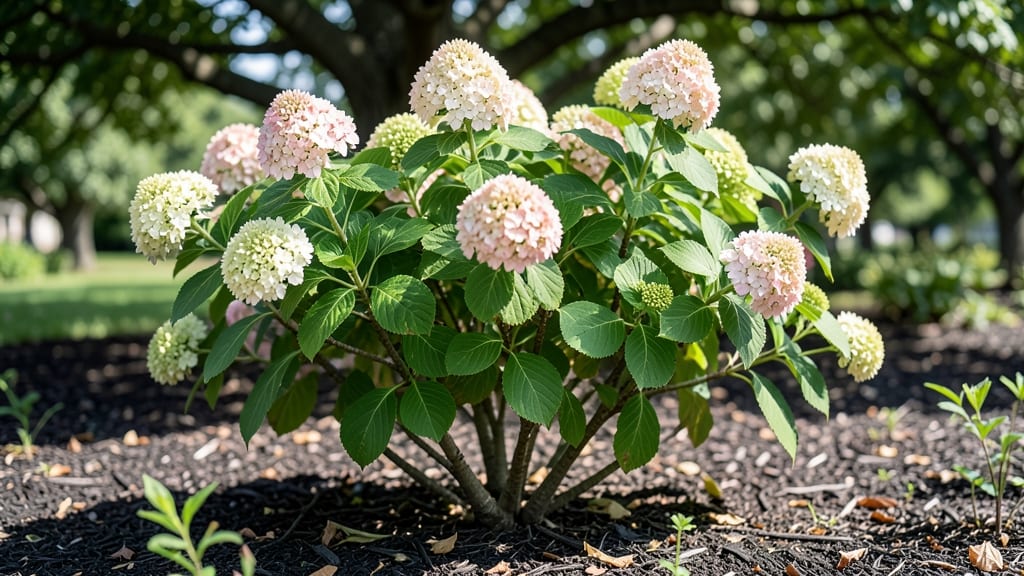
Panicle hydrangeas bloom on old wood, meaning their flowers develop on previous season’s growth rather than new shoots. Pruning too late or cutting back old stems removes potential blooms, so prune immediately after flowering to preserve next year’s flowers.
Panicle hydrangeas rely on last year's stems to produce their signature cone-shaped blooms, unlike mophead varieties that flower on new growth. 🌸 The buds form during summer and need winter's cold to trigger blooming—this process is called cold stratification.
If you prune too late or cut back old stems, you’re essentially removing next year’s flowers before they even form. I’ve seen gardeners accidentally prune away blooms by waiting until spring, when the stems are already dormant.
To avoid this, time your pruning right after the flowers fade in late summer or early fall. This lets the plant set buds for next season while still giving it time to harden off before winter.
Always look for green stems—these are last year’s growth where the blooms will appear. Dead or brown stems can be removed, but keep the healthy ones intact.
Pro tip: If you missed the window, don’t panic—panicle hydrangeas are forgiving. Just avoid heavy pruning until next year’s blooms have fully developed. The key is patience and knowing which stems to keep. 🌿
💡 In This Article
- Why Panicle Hydrangeas Rely on Old Wood for Flowers
- Correct Pruning Timing to Encourage Reblooms
Why panicle hydrangeas rely on old wood for flowers
Panicle hydrangeas (Hydrangea paniculata) produce their iconic cone-shaped blooms on stems that grew the previous season—a phenomenon called old wood blooming. This differs from mophead hydrangeas (H. macrophylla), which flower on current season's growth.
The buds for panicle hydrangeas actually form during the summer months (June-July) along last year's stems, but they remain dormant until exposed to cold stratification—a process requiring 4-6 weeks below 40°F to trigger blooming.
The science behind this involves hormonal signals. As summer temperatures drop, the plant's growth hormones shift from promoting leafy growth to flower bud development.
These buds then enter a state of dormancy, protected by the stem's bark until winter's chill breaks their dormancy. 🌱 Without this cold period, buds may fail to open or produce weak, sparse flowers.
Gardeners in warmer climates sometimes struggle with this because artificial chilling (like refrigeration) can't fully replicate natural cold stratification.
Here’s how to spot the stems carrying next year’s blooms: Look for green, plump stems with visible buds along their length. These are last year’s growth where flowers will emerge. In contrast, new growth (current season’s shoots) is thinner, often reddish-brown, and lacks buds.
If you prune these green stems, you’re removing next year’s potential blooms before they even form. This is why late pruning (after late September) risks cutting off future flowers.
Cold stratification isn’t just about temperature—it’s also about timing. The buds need to experience a gradual temperature drop over weeks, not a sudden freeze. This is why panicle hydrangeas often bloom later in the season (summer to early fall) compared to spring-blooming varieties.
The process ensures flowers appear when pollinators are most active, maximizing reproductive success. 🌿
Contrast this with mophead hydrangeas, which bloom on new wood and can be pruned more aggressively in late winter. Panicle hydrangeas, however, require a more delicate approach. Their reliance on old wood means every pruning decision directly impacts next year’s floral display.
This is why gardeners often describe panicle hydrangeas as "high-maintenance" in terms of pruning timing.
For example, the popular 'Limelight' and 'Little Lime' varieties rely entirely on old wood. If you prune these back hard in spring, you might end up with a bush full of leaves but no flowers that season.
The buds are already formed on last year’s stems, waiting for winter’s chill to wake them up. This is why patience and precise timing are critical when pruning panicle hydrangeas.