
Blooming
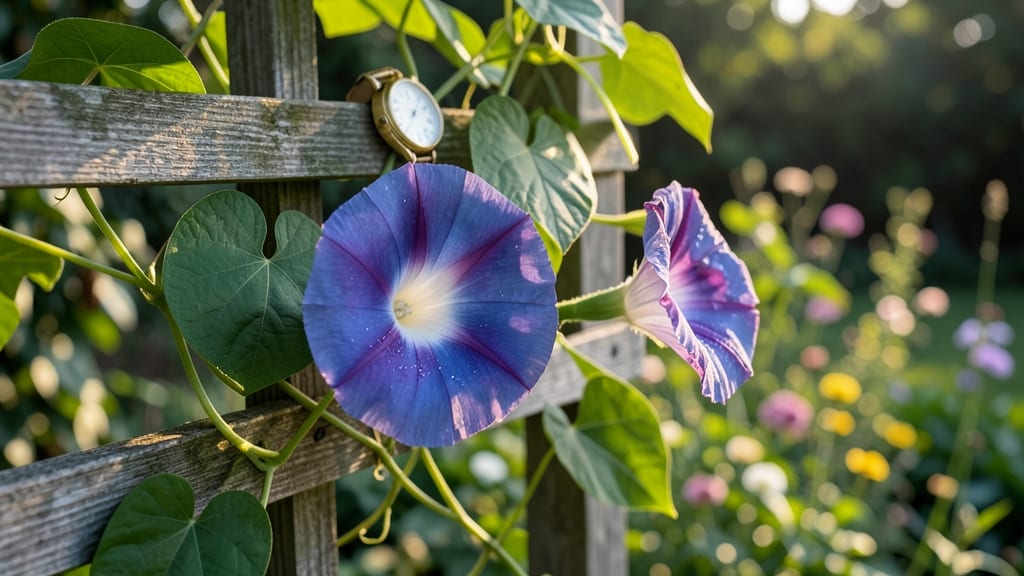
Morning glories don't only bloom in the morning—while most varieties unfurl with sunrise and close by evening, heat-tolerant or tropical types may reopen later in the day or stay open longer when temperatures rise. Their classic morning-only pattern appears when daylight shortens or temperatures drop.
This light-dependent behavior actually stems from a plant survival strategy called photoperiodism, where flowers respond to daylight length and temperature cues. 🌞 Most common morning glories (like Ipomoea nil) follow this pattern strictly, but varieties bred for warmer climates—such as Ipomoea purpurea—often defy expectations by blooming later into the afternoon, especially when daytime highs exceed 80°F.
The key difference lies in their genetic adaptation to tropical conditions, where longer daylight and heat trigger extended bloom windows.
For gardeners wanting to coax extra blooms, selecting heat-resistant varieties and providing consistent moisture can make a noticeable difference. Pruning spent blooms also encourages new growth, though over-pruning may reduce overall flowering. 💫 The secret weapon?
A little shade manipulation—using shade cloth during peak afternoon sun can trick some varieties into delaying their evening closure, giving you that "magical hour" of extended color.
💡 In This Article
- Why Morning Glories Follow a Light-Dependent Bloom Cycle
- How to Extend Morning Glory Blooms with Heat and Care
Why morning glories follow a light-dependent bloom cycle
Morning glories rely on a biological process called photoperiodism, where their blooms respond directly to daylight duration and temperature shifts. These vines contain specialized cells in their flower buds that detect blue and red light wavelengths—the same spectrum plants use for photosynthesis.
When morning light hits these cells, a cascade of hormonal signals (including florigen, a flowering hormone) triggers the petals to unfurl. This mechanism ensures energy isn't wasted on blooms that wouldn't attract pollinators during nighttime hours.
The classic morning-only pattern emerges because most temperate varieties (like Ipomoea nil) evolved in regions with 12-14 hours of daylight.
Their internal clock, regulated by circadian rhythms, causes petals to close by mid-afternoon when light intensity drops below a threshold of ~10,000 lux (similar to bright overcast conditions).
Tropical types, however, often lack this strict rhythm—some hybrids like Ipomoea purpurea may stay open for 6-8 hours when temperatures exceed 75°F, as heat delays the closure signal.
Temperature acts as a secondary regulator. Below 65°F, morning glories enter a "conservation mode," where blooms open briefly but close faster to prevent moisture loss. Above 85°F, the opposite occurs: extended daylight and higher humidity keep petals hydrated longer.
This explains why gardeners in USDA Zones 9-11 often see afternoon reblooms—heat essentially "resets" the photoperiodic timer, overriding the typical morning schedule.
Artificial light can disrupt this cycle too. Grow lights emitting red spectrum wavelengths (660nm) trick plants into thinking it's daytime, sometimes causing blooms to open at night. However, this isn't sustainable—after 24-48 hours, the plant's internal clock corrects itself, often resulting in stunted growth or misshapen flowers.
For gardeners, this means avoiding nighttime garden lights near morning glory vines if you want natural bloom patterns.
Consider these key factors when observing bloom behavior:
- Daylight duration: Shorter days (<12 hours) trigger strict morning-only patterns
- Temperature thresholds: Below 65°F = faster closure; above 80°F = extended blooms
- Humidity levels: Dry air accelerates petal closure (think 30% RH vs 70%)
- Variety genetics: Tropical hybrids may bloom for 4-6 hours vs 2-3 hours for temperate types
The most fascinating example is Ipomoea quamoclit (cypress vine), which sometimes blooms twice daily in optimal conditions—once in the morning and again in late afternoon.
This dual-cycle behavior suggests an evolutionary advantage in regions with bimodal sunlight patterns, like coastal areas with morning fog that burns off by noon. 🌿 For gardeners, this means selecting the right variety for your climate can turn a "morning-only" plant into an all-day spectacle.