
Blooming
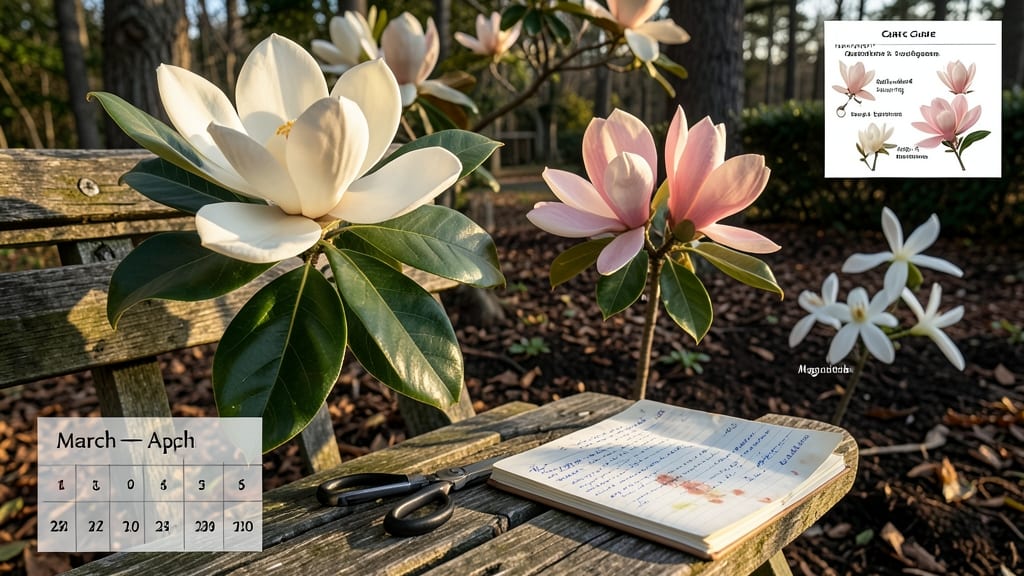
Magnolias do not typically bloom twice a year, but some varieties, like Magnolia × soulangeana, may occasionally produce extra blooms given the right conditions.
Most magnolias are hardwired to follow nature's seasonal cues, with their blooming triggered by specific temperature thresholds and daylight hours. 🌸 The rare exceptions—like the saucer magnolia (Magnolia × soulangeana)—can surprise gardeners with sporadic summer blooms when conditions are just right.
These secondary flowers often appear as a response to ideal moisture levels and nutrient availability rather than strict seasonal timing.
Understanding your specific magnolia variety is key—some, like the star magnolia (Magnolia stellata), are more likely to produce occasional reblooms, while others remain steadfast to their annual spring display.
The science behind this lies in their hormonal regulation, where flower buds form during the previous growing season and require precise environmental triggers to open.
💡 In This Article
- How Magnolia Flowering Cycles Work Scientifically
- Tips to Encourage Reblooming in Magnolia Trees
How Magnolia flowering cycles work scientifically
Magnolias rely on a complex interplay of photoperiodism (daylight sensitivity) and temperature thresholds to trigger blooming. The process begins in late summer or early fall when flower buds form in response to shortening daylight hours—a phenomenon called short-day photoperiodism.
These buds remain dormant through winter until specific temperature cues (typically 50-60°F for 7-10 consecutive days) signal it's time to bloom. This explains why most magnolias burst into flower in early spring before leaves emerge.
The science gets even more fascinating when comparing early-spring bloomers like Magnolia grandiflora versus late-spring varieties such as Magnolia 'Jane'.
Early bloomers often require chilling hours (100-200 hours below 45°F) to break dormancy, while late bloomers may need milder winter conditions. 🌱 What's remarkable is how these trees "count" the cold periods—some species use a biological clock that tracks temperature accumulation over weeks, similar to how fruit trees determine harvest time.
This precise timing explains why magnolias rarely bloom twice in one season.
Hormonal regulation plays the final role in this botanical performance. Once temperature cues are met, the tree's florigen hormone (a flowering signal) activates, causing buds to swell and open.
For reblooming to occur, the plant would need to restart this entire cycle—something that requires near-perfect conditions of moisture, nutrients, and daylight after the initial bloom.
This is why secondary blooms are so rare, typically seen only in hybrid varieties like Magnolia × soulangeana that have been bred for increased plasticity.
Consider the saucer magnolia (Magnolia × soulangeana) as an exception to this rule. This hybrid can sometimes produce sporadic summer blooms because its genetic makeup allows for partial photoperiodic flexibility.
While not a true "second bloom," these flowers often appear as a response to ideal growing conditions rather than strict seasonal timing. The key difference lies in their ability to form new flower buds later in the season when conditions are favorable, though this requires careful garden maintenance.
Another fascinating mechanism involves bud differentiation—the process where flower buds form during the previous growing season. In most magnolias, these buds are "pre-programmed" to open only once per year, typically in spring. The tree's energy is focused on this singular event, leaving little reserve for additional blooms.
This is why gardeners often see magnolias produce abundant flowers one year followed by fewer blooms the next—the tree is replenishing its energy stores rather than preparing for a second round.
For those hoping to coax extra blooms, understanding these mechanisms is crucial. While true reblooming is biologically challenging, creating optimal growing conditions can sometimes encourage sporadic secondary flowers.
The goal is to mimic the ideal environment where the tree feels safe enough to invest energy in additional blooms—a delicate balance of soil health, water management, and seasonal care that we'll explore in the next section.