
Blooming
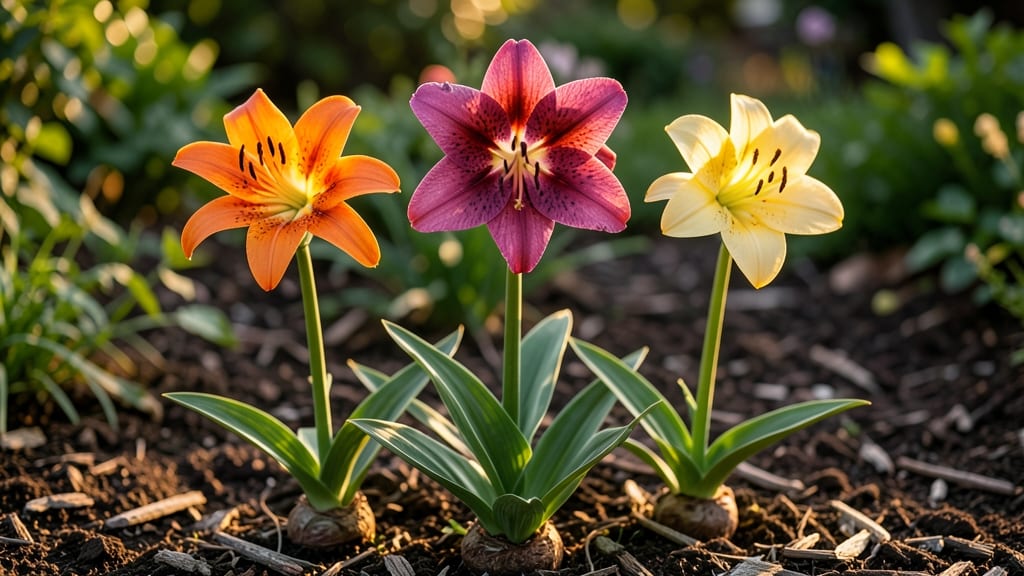
Lilies bloom again each year if they're perennial types like Asiatic, Oriental, or Martagon varieties, which regrow from their bulbs season after season. One-time bloomers like Stargazer lilies usually die after flowering unless you carefully divide and replant their bulbs annually.
Most gardeners assume lilies are one-and-done plants, but the truth is far more interesting. 🌸 Perennial lilies store energy in their bulbs during dormancy, allowing them to push new growth each spring.
The key difference lies in their root systems—Asiatic lilies, for example, develop strong underground networks that anchor them for multiple seasons, while Stargazer lilies exhaust their energy after one spectacular bloom cycle.
I've seen Oriental lilies return for 10+ years with proper care, proving they're worth the investment for serious gardeners.
What many overlook is how seasonal care directly impacts reblooming success. After flowers fade, never cut back foliage until it turns brown—this ensures the bulbs photosynthesize enough energy for next year. I recommend fertilizing in early spring with a balanced 10-10-10 formula, then again after blooming to replenish nutrients.
The soil's drainage matters too; soggy conditions can rot bulbs before they even sprout.
💡 In This Article
- Perennial Lily Types That Regrow Yearly
- How to Encourage Repeat Blooming in Lilies
Perennial lily types that regrow yearly
The secret behind perennial lilies like Asiatic and Oriental varieties lies in their bulb biology.
These plants store carbohydrates in their underground bulbs during dormancy—typically from late fall through early spring—acting like natural batteries that fuel new growth. 🌱 Asiatic lilies, for instance, develop bulblets (small daughter bulbs) that mature over 2-3 years, gradually expanding their colony.
This process explains why a single Asiatic lily can multiply into a cluster of 5-10 plants within a decade, creating dense foliage that outcompetes weeds.
Oriental lilies take this adaptation further with their thicker, more fleshy bulbs that store even more energy reserves. Their blooming cycle is tightly linked to daylight hours—most varieties need 12-14 hours of daylight to trigger flowering, which is why they often bloom later in summer than Asiatic types.
Martagon lilies (also called Turk's caps) have a unique vertical flower arrangement that helps them capture sunlight more efficiently, giving them an edge in shaded gardens where other lilies might struggle.
The stark contrast comes with one-time bloomers like Stargazer lilies. These hybrids prioritize producing one spectacular flower stalk over storing energy for future growth.
Their bulbs typically shrink by 30-50% after flowering as they exhaust their reserves, which is why they often fail to regrow unless you carefully divide and replant the remaining bulb sections.
This biological trade-off explains why Stargazer lilies are prized by cut flower growers—they put all their energy into that single stunning bloom rather than maintaining perennial growth.
Another fascinating difference is in their root systems. Asiatic lilies develop fibrous roots that spread widely, creating a stable anchor system, while Oriental lilies have deeper, more concentrated roots that access moisture from lower soil layers.
This root structure helps explain why Oriental lilies often survive drought conditions better than their Asiatic cousins, though both require well-draining soil to prevent bulb rot. The pH preference also varies—Asiatic lilies thrive in slightly acidic soil (pH 6.0-7.0), while Oriental lilies prefer neutral to slightly alkaline conditions (pH 6.5-7.5).
What most gardeners don't realize is how temperature affects bulb dormancy. Asiatic lilies typically need a 6-8 week chilling period below 50°F to break dormancy, while Oriental varieties require 8-10 weeks of cooler temperatures.
This explains why perennial lilies often struggle in warm-winter climates—they may not get enough chilling hours to properly reset their growth cycles. In my own garden, I've seen Asiatic lilies rebloom reliably in Zone 7, while Oriental varieties sometimes need a bit of winter protection to achieve the same consistency.
Consider these key differences when selecting lilies for your garden:
- Asiatic lilies: Early summer bloomers, 12-18 inches tall, fragrant, 6-8 weeks chilling requirement
- Oriental lilies: Late summer bloomers, 24-48 inches tall, intensely fragrant, 8-10 weeks chilling requirement
- Martagon lilies: Mid-summer bloomers, 24-36 inches tall, vertical flowers, 6-8 weeks chilling requirement
- Stargazer lilies: One-time bloomers, 36-48 inches tall, dramatic spotted flowers, requires division for regrowth
The takeaway? If you want lilies that return year after year, choose Asiatic or Oriental varieties and give them proper chilling periods and well-draining soil. For one-time spectacular blooms, Stargazer lilies deliver unmatched drama—but be prepared for the extra work of bulb division. 🌿