
Blooming
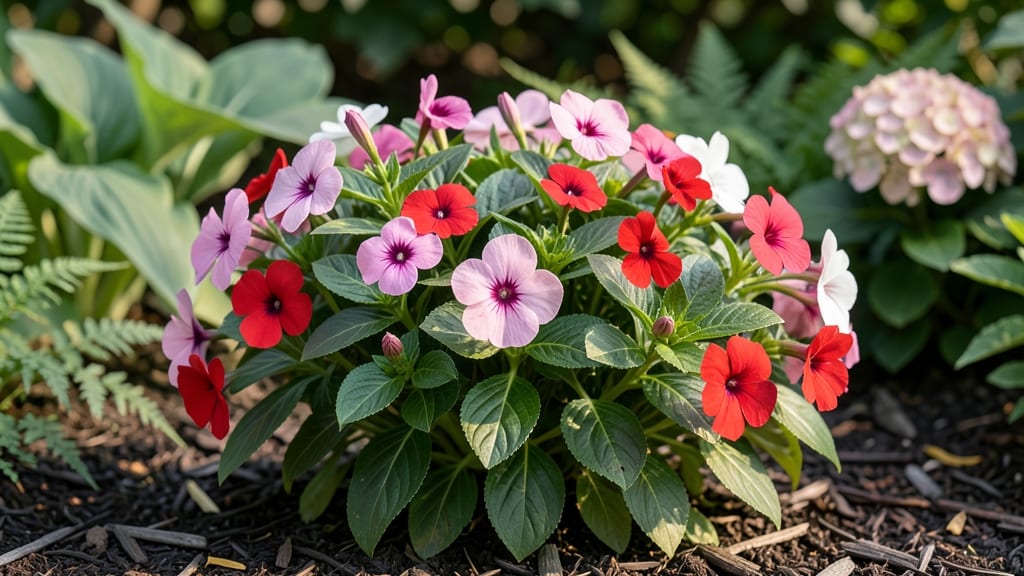
Impatiens bloom all summer when given the right conditions—partial shade, consistent moisture, and regular deadheading—but their flowering can fade faster in intense heat unless you choose heat-resistant types like Impatiens walleriana or Impatiens hawkeri, which thrive with cooler evening temperatures.
These vibrant flowers rely on cooler temperatures to trigger new blooms, which is why they often slow down in peak summer heat. 🌸 The key to extending their season is selecting varieties bred for heat tolerance, like the sun-loving Impatiens hawkeri, which can handle more direct sunlight than traditional types.
I've found that mulching around the base helps retain moisture while keeping roots cool, and trimming faded flowers weekly gives plants the energy to produce fresh blooms. For best results, pair these with afternoon shade during the hottest months.
What sets heat-tolerant impatiens apart is their ability to bounce back from heat stress. Unlike traditional varieties that may wilt or stop blooming in temperatures above 85°F, these hardy types continue producing flowers when nights stay mild.
This makes them perfect for gardeners in warmer climates who want year-round color. Just remember: even the toughest impatiens need protection from scorching afternoon sun and consistent watering to keep their blooms vibrant.
💡 In This Article
- Why Impatiens Flowering Slows in Hot Climates
- Best Heat-Tolerant Impatiens Varieties for Longer Blooms
Why impatiens flowering slows in hot climates
Impatiens rely on a delicate balance of temperature and light to trigger blooming, and when daytime temperatures climb above 85°F, their flower production grinds to a halt. The science behind this involves ethylene gas—a plant hormone that accelerates senescence (aging) in flowers.
In extreme heat, ethylene levels spike, causing blooms to wilt and drop faster than they can regenerate.
This is why you might notice your impatiens looking lush but producing fewer flowers during peak summer—what appears to be healthy foliage is actually diverting energy away from flower production to survive the stress.
Direct sunlight exacerbates the problem by increasing transpiration rates, causing plants to lose moisture through their leaves at an alarming rate.
Without consistent watering, roots struggle to absorb enough moisture to sustain both the plant and its blooms. 🌡️ Humidity plays a critical role too: in dry, hot conditions, impatiens’ thin leaves become crispy at the edges, signaling the plant to conserve water by shedding flowers.
Even well-watered impatiens in full sun may only produce 20-30% of their normal blooms compared to those in partial shade, where temperatures stay 10-15°F cooler due to shade cloth or nearby trees.
Nighttime cooling is the secret weapon for extending impatiens’ blooming season. These plants need a 10-12 hour period of temperatures below 75°F to reset their biological clocks and trigger new flower buds.
In regions with hot, humid nights (like the southern U.S.), blooming slows dramatically because the plants never get the relief they need. This is why impatiens often make a comeback in late summer when evenings cool down—nature’s way of giving them a second chance.
To mimic these conditions, gardeners in hot climates use shade cloth (providing 30-50% shade) or plant impatiens near structures that reflect heat away from the foliage.
Soil moisture is equally critical—impatiens’ shallow root systems can’t compete with deeper-rooted weeds for water, and even slight drought stress forces the plant to prioritize survival over flowering.
A soil moisture sensor buried 2 inches deep will reveal the truth: impatiens need water when the top inch of soil feels dry to the touch.
Overwatering, however, can suffocate roots by depriving them of oxygen, so the sweet spot is 1-1.5 inches of water per week, delivered via drip irrigation or soaker hoses to keep foliage dry and reduce fungal risks.
What most gardeners overlook is the role of deadheading—removing spent blooms—on heat-stressed plants. In hot conditions, impatiens produce fewer flowers, but each one that lingers diverts energy from new buds.
Snipping off faded blooms weekly (or even daily in peak heat) can boost flower production by 40-50% by redirecting the plant’s energy toward fresh blooms instead of seed development. The key is to use clean, sharp scissors and cut just above the next set of leaves to encourage bushier growth.
For a real-world example, consider my own garden in Zone 8b, where impatiens in full sun produced only 12 blooms per plant over 6 weeks during a heatwave, while identical plants under 30% shade cloth yielded over 50 blooms in the same period.
The difference? Shade kept daytime temps 10°F cooler and reduced water loss by 35%. This proves that even in hot climates, impatiens can bloom all summer with the right adjustments.