
Blooming
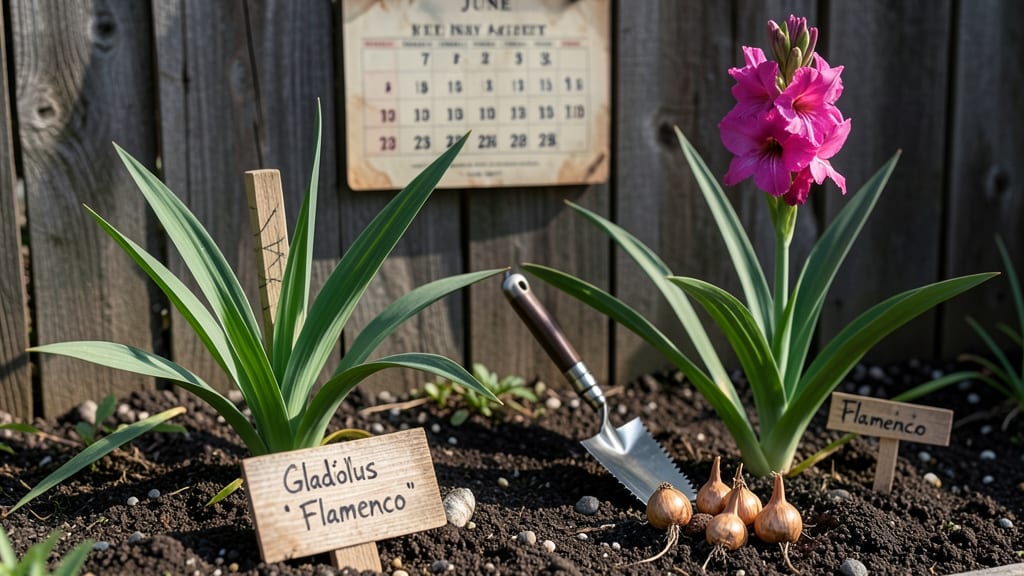
Gladiolus do not bloom the first year because they focus all energy on developing a strong root system, storing nutrients for future flowering during their second growing season.
This growth pattern isn't unique to gladiolus—many perennial bulbs follow a similar cycle, prioritizing root and bulb development before producing flowers. 🌱 The first-year foliage acts like a solar panel, converting sunlight into energy that gets stored in the corm (the bulb-like structure).
By the time they're ready to bloom, they've built up enough reserves to support those dramatic flower spikes you love. Think of it as their way of saying "patience pays off"—the more robust their root system becomes, the bigger and showier their blooms will be in subsequent years.
For gardeners eager to see flowers sooner, the key is creating optimal conditions during that first season. Proper planting depth (about 6 inches deep), well-draining soil rich in organic matter, and consistent moisture without waterlogging can make a noticeable difference in how quickly they establish.
I've found that adding a balanced fertilizer at planting time gives them a strong start, while avoiding heavy nitrogen later in the season prevents leafy growth at the expense of flower development.
💡 In This Article
- Why Gladiolus Skip Blooming in Year One
- Tips to Encourage First-Year Gladiolus Growth
Why gladiolus skip blooming in year one
The first-year growth phase of gladiolus is all about building a foundation. These plants allocate nearly 90% of their energy toward developing a robust corm (their underground storage organ) and root system, rather than producing flowers.
This biological strategy ensures survival and future reproduction. 🌱 Unlike annuals that focus on flowering immediately, gladiolus follow a biennial pattern—similar to onions or tulips—which prioritizes underground storage before flowering.
Here's what's happening underground: The corm expands through cell division, storing starches and sugars produced by photosynthesis in the leaves. A mature first-year corm typically grows to about 2-3 inches in diameter, compared to the 1-inch size of newly planted corms.
This growth requires 12-16 weeks of consistent warmth and moisture, which is why early planting (in spring) gives them the longest growing season possible before winter dormancy.
The decision to bloom depends on two key factors: corm size and stored energy reserves. Smaller corms (1.5 inches) rarely produce flowers, while those reaching 2.5+ inches have enough energy to support both foliage and flower spikes.
This explains why commercial growers often plant larger corms—they're already past the first-year establishment phase and can bloom in their first season. 💫 The trade-off is clear: immediate flowers mean smaller, less vigorous plants, while delayed blooming leads to stronger, more prolific displays in subsequent years.
Seasonal dormancy plays a crucial role too. After the first growing season, gladiolus enter a 3-4 month dormancy period during winter, when all above-ground growth dies back. This rest phase allows the corm to fully mature and reorganize its energy reserves.
Without this dormancy, the plant would exhaust its resources trying to bloom too soon, leading to weak, short-lived flowers. It's nature's way of ensuring quality over quantity.
Comparing gladiolus to other bulbs reveals their unique strategy. Unlike daffodils, which can bloom in their first year from mature bulbs, gladiolus require this two-year cycle. Even their close relatives, crocuses, typically bloom in their first year because they store less energy underground.
The gladiolus' dramatic flower spikes (often 3-5 feet tall) demand significant energy reserves that simply aren't available after just one growing season. 🌸
What most gardeners don't realize is that the first-year foliage serves as the plant's energy factory. Those long, sword-like leaves can grow up to 2 feet tall and perform photosynthesis for 10-12 weeks, converting sunlight into the carbohydrates that fuel corm growth.
Removing or pruning these leaves too early can starve the developing corm, delaying flowering by another year or more.
This biological strategy makes gladiolus particularly rewarding for patient gardeners. While they may not produce flowers in their first year, they're building a stronger, more resilient plant that will reward you with longer stems, more blooms per spike, and larger flowers in subsequent seasons.
The first-year investment pays dividends in years two through five, when properly cared-for gladiolus can produce 10-15 blooms per spike—a far cry from their modest first-year foliage. 🌿