
Blooming
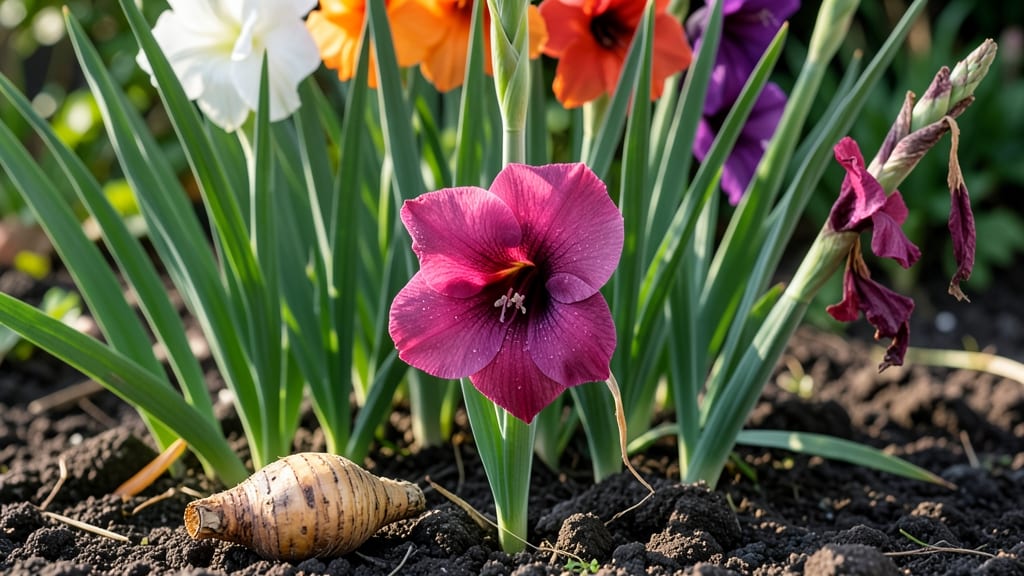
Gladiolus do not typically bloom more than once per season, as they produce their vibrant flowers in a single flush that lasts about 2-3 weeks. Some varieties may rebloom under perfect conditions, but most gardeners treat them as annuals due to winter survival challenges in colder climates.
Most gladiolus varieties follow a strict seasonal blooming cycle because their energy is focused on producing flowers rather than storing reserves for multiple blooms. 🌱 The underground corms (their storage organs) prioritize flower production in spring/summer, leaving little energy for a second flush.
That said, with careful care—like consistent watering, balanced fertilization, and strategic deadheading—I’ve seen some late-season blooms appear if the plant has enough stored energy and favorable growing conditions.
What’s fascinating is how light exposure plays a role. Gladiolus need full sun (6+ hours daily) to trigger blooming, but once they’ve spent their energy, they enter dormancy.
In warmer climates where winters are mild, you might coax a second bloom by dividing and replanting corms, but this requires extra effort and isn’t always reliable.
💡 In This Article
- Why Gladiolus Usually Bloom Once Per Season
- How to Encourage Gladiolus Reblooming in Your Garden
Why gladiolus usually bloom once per season
The single-season blooming habit of gladiolus stems from their biological energy allocation strategy. These plants invest nearly all their stored energy—held in their corm (a specialized underground storage organ)—into producing one dramatic floral display rather than multiple smaller blooms.
This is known as a "determinate" growth pattern, where the plant prioritizes reproductive success over extended vegetative growth. 🌟 Unlike perennials that spread energy across multiple blooming cycles, gladiolus focus their entire photosynthetic output on creating those iconic sword-shaped spikes during their peak growing season.
The process begins in early spring when rising temperatures and increasing daylight trigger the corm to break dormancy. This initiates a rapid growth phase where the plant diverts nutrients from the corm to develop leaves and a single flower stalk.
What's fascinating is how this energy transfer works: the corm contains starch reserves that convert to sugars during photosynthesis, fueling both leaf and flower development.
By the time the first blooms appear, the plant has already committed over 70% of its available energy to this single reproductive event, leaving little for subsequent blooms.
Temperature plays a crucial role in this cycle. Gladiolus require consistent warmth (ideal growing temperatures between 65-75°F) to maintain active growth. When nights drop below 50°F, the plant senses the approach of winter and begins preparing for dormancy.
This temperature trigger causes the corm to stop producing flowers and instead focuses on storing nutrients for next year's growth. In colder climates, this dormancy period becomes more pronounced, effectively ending the blooming season until the following spring.
Light exposure further influences this pattern. Gladiolus are photoperiod-sensitive, meaning they respond to daylight length. The long days of summer provide the energy needed for their dramatic blooms, but once the days shorten in late summer, the plant receives signals to conserve energy.
This is why you rarely see gladiolus blooming in fall—they've essentially "shut down" their flowering mechanisms until the following season's optimal growing conditions return.
What most gardeners don't realize is how the corm's size affects reblooming potential. Larger corms (typically 2-3 inches in diameter) contain more stored energy and may produce slightly longer blooming periods or even secondary spikes under perfect conditions.
However, even these larger corms rarely produce more than 10-15% of their initial bloom count in a second flush, making the energy trade-off clear: one spectacular display versus multiple modest ones.
This biological strategy makes perfect sense when you consider gladiolus' evolutionary history. As plants that originated in the Mediterranean and South Africa, they evolved in environments with distinct seasonal patterns.
Their single-bloom strategy ensures maximum reproductive success during their limited growing window, rather than spreading energy thin across multiple blooming attempts that might not all reach maturity.