
Blooming
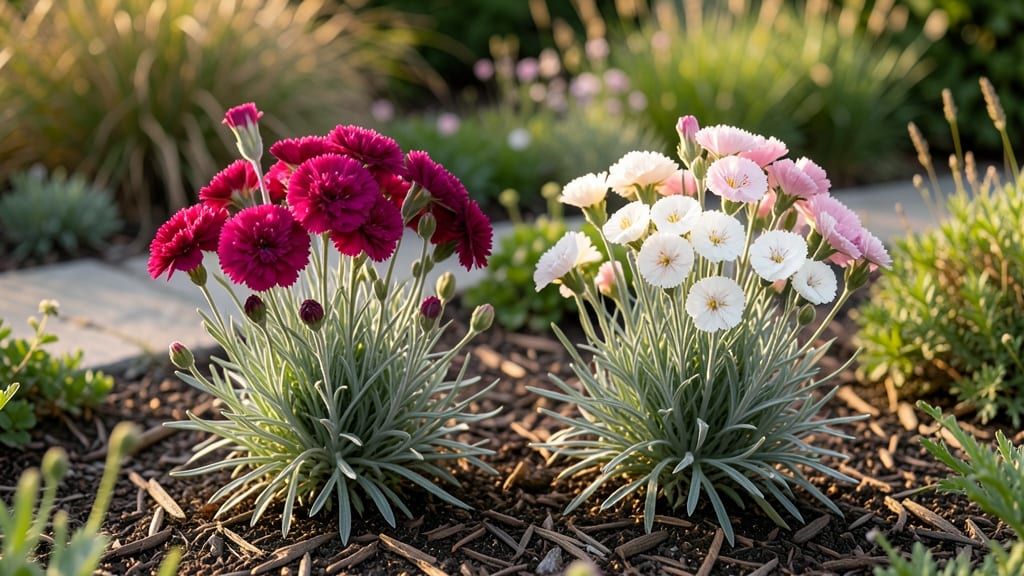
Dianthus don't bloom all summer continuously, as most varieties flower primarily in spring and fall, with occasional mid-summer reblooms if you deadhead spent blooms and provide proper heat management.
Most dianthus varieties follow a natural two-season bloom cycle because they're sensitive to heat and daylight changes. 🌸 The spring flush happens when temperatures rise but before summer's peak, while fall blooms occur as days shorten.
Some heat-tolerant perennial types—like 'Firewitch' or 'Matrona'—might produce a smaller mid-summer display if you remove faded flowers promptly and keep soil consistently moist without waterlogging. Annual dianthus, however, typically bloom all season but fade completely by early fall.
What makes this tricky is that different species react uniquely to your local climate. For example, Chinese dianthus thrives in cooler regions and may struggle in southern heat, while Sweet William varieties often handle summer better. The key is observing your plants' specific responses and adjusting care accordingly.
💡 In This Article
- Dianthus Bloom Cycles: Seasonal Flowering Patterns by Variety
- Extending Dianthus Blooms: Pruning and Heat Management Tips
Dianthus bloom cycles: seasonal flowering patterns by variety
Dianthus bloom cycles are primarily governed by photoperiodism—the plant's response to daylight length—and temperature sensitivity. Most varieties enter a semi-dormant state during peak summer heat (85°F+) because the long daylight hours trigger metabolic shifts that redirect energy toward root growth rather than flowering.
This explains why you typically see two main bloom seasons: spring (when days are lengthening but temperatures are moderate) and fall (as daylight shortens again). 🌿 For example, Sweet William varieties often bloom from late spring through early summer, while Chinese Dianthus (like 'Firewitch') may produce a smaller mid-summer flush if conditions are ideal.
The distinction between annual and perennial dianthus matters significantly. Annual types (like 'Pink Champagne') may bloom continuously from spring until frost because they complete their life cycle in one season.
Perennial varieties, however, rely on stored energy in their roots to fuel reblooms. Day-neutral types (such as 'Matrona') are exceptions—they can produce scattered blooms throughout summer if given proper care, but these are usually smaller and less prolific than spring/fall displays.
The key difference lies in their genetic programming: perennials prioritize survival, while annuals focus on rapid reproduction.
Heat tolerance varies dramatically between species. Carnation Dianthus (Dianthus caryophyllus) often handles summer better than Chinese Pinks because their ancestors evolved in Mediterranean climates with hot, dry summers. In contrast, Sweet William varieties (Dianthus barbatus) tend to bolt (go to seed prematurely) if summer temperatures exceed 80°F for extended periods.
This is why gardeners in Zone 9+ often see fall reblooms as the primary display rather than summer blooms. The science here involves ethylene production—heat stress triggers this plant hormone, which can prematurely terminate flower buds.
Daylight triggers play a crucial role too. Most dianthus require 12-14 hours of daylight to initiate flowering, but prolonged exposure to 15+ hours of summer sunlight can suppress bloom formation. This is why you'll often see late summer/early fall reblooms as days naturally shorten.
For example, in Zone 5, dianthus might bloom from May-June and again in September-October, while in Zone 8, the spring flush occurs in March-April with a smaller September display. The variation comes down to how quickly your region transitions between seasons.
Consider these key factors when selecting varieties for your climate:
- Cooler climates (Zones 3-6): Most perennials will bloom spring and fall with minimal summer heat stress
- Hot climates (Zones 7-9): Look for heat-tolerant types like 'Firewitch' or provide afternoon shade to extend summer blooms
- Annual varieties: Choose if you want continuous color but accept they'll fade by early fall
- Perennial varieties: Select for multi-season interest but expect smaller summer displays unless you implement rebloom strategies
What most gardeners overlook is how soil moisture interacts with these cycles. During summer, dianthus roots need consistent moisture (1 inch per week) to support potential reblooms, but waterlogging can cause root rot and further suppress flowering.
The balance is delicate—too little water stresses the plant, while too much creates anaerobic conditions that inhibit nutrient uptake. This is why mulching with 2-3 inches of organic matter helps maintain even moisture while protecting roots from temperature extremes. 💧