
Flowers
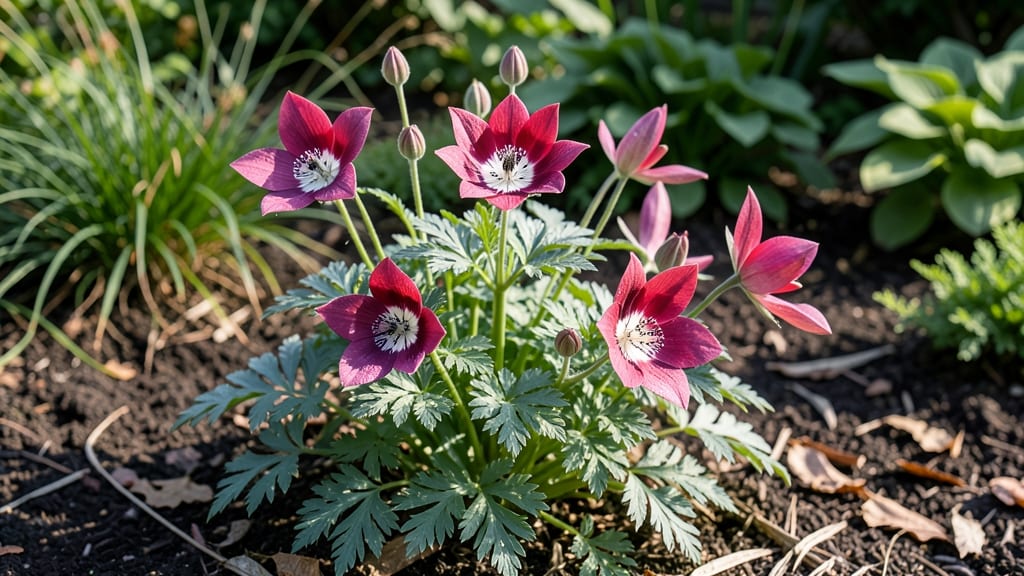
Columbine flowers do not bloom all summer continuously, as most varieties produce spring-to-early summer blooms lasting 4-6 weeks, though some late-season types extend into fall with sporadic reblooming under ideal conditions.
Columbine blooms are famously fleeting, with most varieties following a strict seasonal rhythm tied to daylight hours and temperature shifts. 🌸 The 4-6 week bloom window in spring and early summer reflects their natural adaptation to cooler weather—once temperatures climb above 80°F, many columbines go dormant to conserve energy.
However, a few cold-hardy hybrids like aquilegia vulgaris may surprise you with late-summer bursts of color if given consistent moisture and partial shade.
What sets columbines apart is their genetic bloom programming: each flower stalk produces blooms sequentially from the bottom up, ensuring a staggered display. This means even within their short bloom periods, you'll enjoy fresh flowers appearing daily for weeks.
The key to extending their season lies in understanding these natural patterns—rather than forcing continuous blooms, which isn't biologically possible for most varieties.
💡 In This Article
- Columbine Bloom Cycles by Variety and Climate
- Extending Columbine Blooms with Pruning and Care
Columbine bloom cycles by variety and climate
Columbine flowers follow strict seasonal cues tied to their native habitats, where they evolved to bloom during cooler months when competition for pollinators is lower.
Most species, like the native Canadian columbine (Aquilegia canadensis), produce their vibrant displays between late April and early June—a window that aligns with spring's mild temperatures (50-70°F) and increasing daylight.
This timing isn't random: columbines are day-length sensitive, meaning their internal clocks trigger flowering when daylight exceeds 14 hours, typically in late spring. Once temperatures rise above 75°F, their metabolism shifts to energy conservation, causing buds to abort or flowers to wilt prematurely.
The European columbine (Aquilegia vulgaris) breaks this pattern slightly, often showing a second, weaker bloom cycle in late summer (August-September) if grown in regions with cooler maritime climates.
This variety's extended season stems from its ability to tolerate partial shade and maintain root moisture during heatwaves—traits absent in sun-loving species like golden columbine (Aquilegia chrysantha), which blooms just once in late spring.
The key difference lies in their vernalization requirements: while most columbines need 6-8 weeks of cold stratification to break dormancy, some hybrids can rebloom if given consistent 1-2 inches of water weekly and well-draining soil with 50% organic matter.
Climate plays a dramatic role in bloom duration. In USDA Zone 5 or colder, columbines may produce 2-3 weeks of blooms due to shorter growing seasons, while Zone 8+ gardens can enjoy 6-8 weeks of flowers if planted in morning sun with afternoon shade.
The heat threshold of 85°F acts as a universal cutoff: above this, even cold-hardy varieties like Aquilegia formosa will drop buds. This explains why mountain gardens often see longer bloom seasons—the cooler nights preserve flower integrity longer than urban heat islands.
What most gardeners overlook is how humidity levels affect bloom quality. Columbines native to arid western regions (e.g., Aquilegia flavescens) produce smaller, more concentrated blooms in dry conditions, while eastern varieties like Aquilegia canadensis develop larger, more delicate flowers when humidity stays above 50%.
This moisture sensitivity is why mulching with straw can extend blooms by 10-15 days—it maintains soil moisture without suffocating roots, a critical factor during their 4-6 week bloom window.
For those seeking year-round color, consider perennial columbine hybrids like 'McKana's Giant', which produces multiple bloom cycles if deadheaded aggressively. However, even these varieties require stratification periods between cycles—a reminder that columbines, despite their delicate appearance, are highly adapted to seasonal rhythms.
Their bloom patterns reflect millennia of evolutionary pressure to conserve resources during unfavorable conditions, making continuous summer blooms biologically implausible for most species.