
Blooming
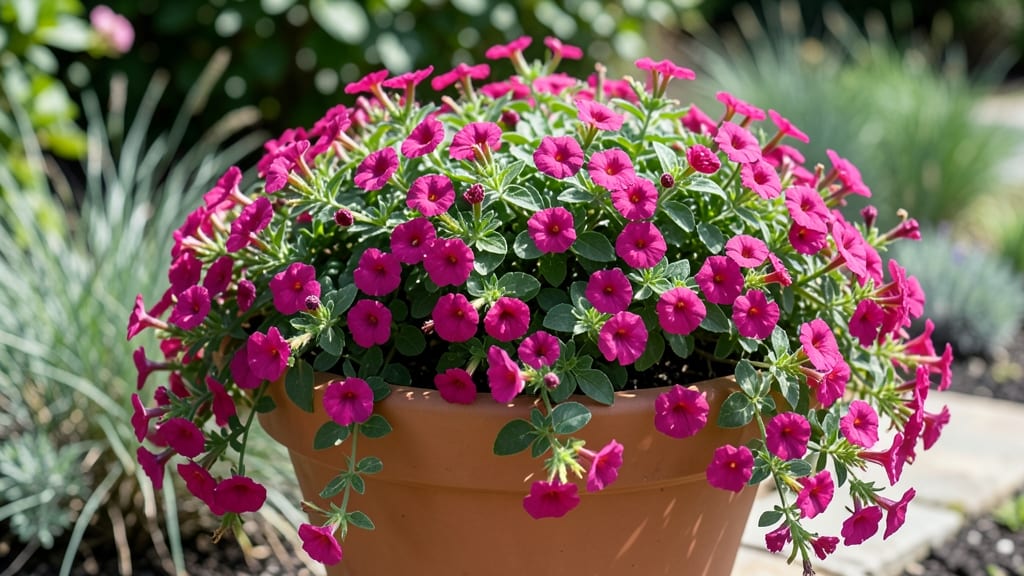
Calibrachoa blooms all summer when given full sun exposure and regular deadheading, but their flowering can wane with cooler evenings or inconsistent watering. Proper pruning and moisture control are essential for maintaining vibrant blooms throughout the season.
Calibrachoa, often called million bells, are summer's rockstars in the garden because they naturally produce flowers in abundance—but only when conditions align. 🌿 The key lies in their light requirements: they need at least 6-8 hours of direct sunlight daily to trigger continuous blooming.
When nights dip below 55°F, their growth slows, and flowers may drop prematurely. That's why gardeners in cooler climates often treat them as annuals, while those in warmer zones can coax them into fall blooming with proper care.
What truly extends their season is consistent deadheading—removing spent blooms prevents energy waste on seed production. I've found that pinching back leggy stems by one-third encourages bushier growth, which translates to more flowers.
For container gardens, a balanced liquid fertilizer every 2-3 weeks keeps them thriving, while drought stress can cause buds to drop before opening.
💡 In This Article
- How Light and Temperature Affect Calibrachoa Blooming Seasons
- Pruning and Care Tips to Maximize Calibrachoa Summer Flowers
How light and temperature affect calibrachoa blooming seasons
Calibrachoa's flowering mechanism is directly tied to photosynthesis efficiency, which peaks under 6-8 hours of direct sunlight daily. These plants use a process called photoperiodism, where sunlight triggers hormone production (like florigen) that signals flower buds to form.
Without sufficient light, they'll produce fewer blooms and may develop long, leggy stems as they stretch toward any available light source. 🌞 In my experience, containers placed in south-facing spots yield the most vibrant blooms, while those in east or west exposures might need supplemental light in cooler climates.
The temperature sweet spot for continuous blooming is between 70-85°F during the day and 55-65°F at night. When daytime temps exceed 90°F, the plants experience heat stress, causing buds to drop before opening. This is why calibrachoa often struggle in southern summers without afternoon shade.
Conversely, nights below 50°F slow metabolic processes, reducing flower production. The ideal scenario creates a balance where the plant can photosynthesize efficiently during the day while conserving energy at night.
What most gardeners don't realize is how humidity plays a supporting role. Calibrachoa thrive in 40-60% humidity ranges—too dry air causes buds to dry out, while excessive humidity promotes fungal diseases like powdery mildew that weaken the plant.
I've noticed that morning watering (before 10 AM) helps maintain this balance by reducing evaporation rates. The combination of proper light, temperature, and humidity creates an environment where calibrachoa can continuously produce flowers throughout the growing season.
Seasonal variations also impact blooming patterns. In early summer, when days are long but temperatures moderate, calibrachoa often produce their most abundant flowers. However, as summer progresses and heat intensifies, many gardeners observe a noticeable decline in blooming unless they provide afternoon shade or increase watering frequency.
The key is monitoring your plants' stress signals—wilting leaves or dropped buds are clear indicators that conditions need adjustment.
For those in cooler climates, extending the blooming season requires strategic planning. Starting calibrachoa indoors 8-10 weeks before the last frost date gives them a head start, while using black plastic mulch around containers can raise soil temperatures by 5-10°F.
This small temperature boost can make the difference between a plant that thrives and one that struggles. The science shows that even modest temperature increases in the root zone can significantly enhance flower production.
Consider these growing conditions for optimal calibrachoa performance:
- Light requirements: Full sun (6+ hours) for maximum blooms; partial shade (4-6 hours) in hottest regions
- Temperature range: Daytime 70-85°F, nighttime 55-65°F for best results
- Humidity control: Maintain 40-60% through proper watering and airflow
- Seasonal adjustments: Provide afternoon shade in peak summer heat or use protective fabrics