
Blooming
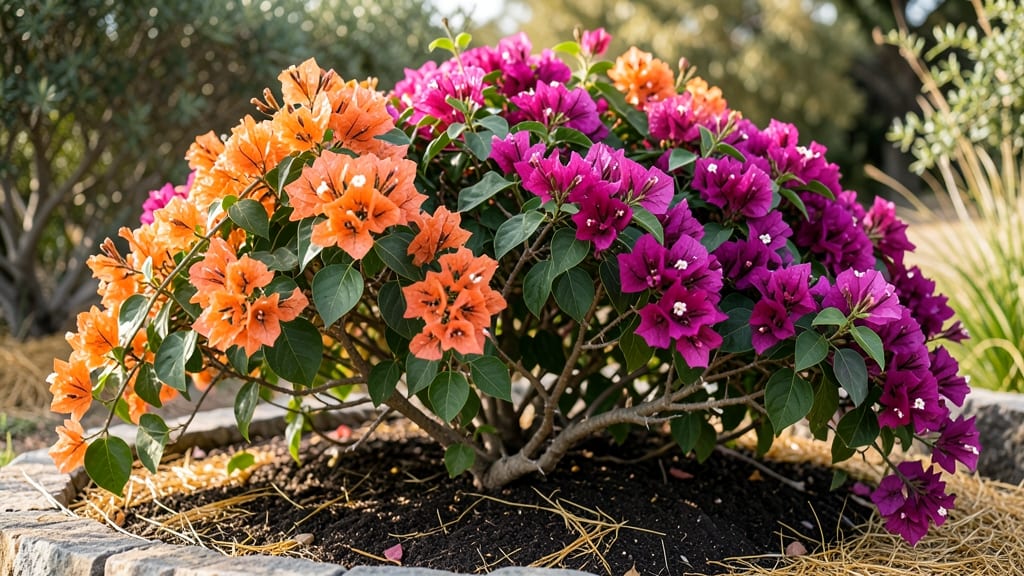
Bougainvillea does not bloom year round naturally, as most varieties thrive in warm climates with distinct seasonal triggers like heat, sunlight, and pruning cycles. However, some tropical varieties or well-maintained plants may produce sporadic blooms outside peak seasons with proper care and ideal conditions.
Bougainvillea's blooming habits are tightly linked to their natural growing seasons, which typically align with warmer months. 🌸 In cooler climates, these plants often enter dormancy during winter, conserving energy until temperatures rise again.
Even in tropical regions, most bougainvillea varieties follow seasonal cues—long daylight hours and consistent warmth trigger flower production. The key to encouraging blooms outside these windows lies in mimicking these natural conditions through strategic care, like providing balanced nutrients and maintaining consistent moisture levels without overwatering.
What many gardeners don't realize is that bougainvillea's vibrant bracts (the colorful parts we call "flowers") are actually modified leaves that respond to stress signals. Pruning at the right time—just after a bloom cycle—can stimulate new growth and extend the flowering period.
For tropical varieties, this might mean year-round blooms with minimal gaps, while subtropical types will still show seasonal patterns unless you create ideal microclimates with protection from cold snaps.
💡 In This Article
- Climate and Seasonal Factors Affecting Bougainvillea Blooms
- Tips to Extend Bougainvillea Blooming Periods
Climate and seasonal factors affecting bougainvillea blooms
Bougainvillea's blooming cycles are primarily governed by temperature, which acts as a biological trigger. Most varieties enter dormancy when nighttime temperatures drop below 50°F (10°C), halting flower production entirely. This is because bougainvillea's metabolic processes slow down to conserve energy, similar to how many deciduous plants prepare for winter.
In regions like Florida or California, where winters rarely drop below 55°F (13°C), some varieties can maintain near-continuous blooming with minimal interruptions.
The length of daylight also plays a crucial role. Bougainvillea is classified as a "short-day" plant, meaning it requires 10-12 hours of daylight to trigger flowering.
In summer months, when days stretch to 14+ hours, the plant may produce fewer blooms unless you provide artificial shading during peak sunlight hours (10 AM to 2 PM) to reduce daylight exposure to 10-12 hours.
Humidity levels matter too—too much moisture can cause fungal issues that stress the plant, while dry conditions below 40% humidity may lead to premature flower drop.
Frost sensitivity is another critical factor. Even a light frost (32°F/0°C) can kill bougainvillea's tender growth, often resulting in complete defoliation.
The plant's bracts (the colorful parts) are particularly vulnerable to cold damage, which is why many gardeners in temperate zones grow bougainvillea in containers that can be moved indoors during winter.
In tropical climates, the absence of cold seasons allows some varieties like Bougainvillea spectabilis to bloom almost continuously when given proper care.
Seasonal shifts also affect nutrient availability. During active growth phases (spring to early fall), bougainvillea requires balanced fertilizer (10-10-10 NPK ratio) every 4-6 weeks to support flower production. In cooler months, reduce fertilization to 50% strength to prevent excessive leafy growth at the expense of blooms.
The plant's natural cycle mirrors this—it prioritizes vegetative growth when temperatures rise in spring, then shifts energy to flowering as summer approaches.
Consider these key climate-based factors when planning your bougainvillea care:
- Temperature zones: Tropical (70-90°F/21-32°C year-round), subtropical (50-85°F/10-29°C with mild winters), and temperate (40-80°F/4-27°C with cold winters)
- Daylight manipulation: Use shade cloth (30-50%) during summer to regulate blooming
- Frost protection: Move potted plants indoors before 50°F (10°C) nights or use frost cloth
The most striking example is Bougainvillea glabra, which naturally blooms year-round in its native Brazil but may show seasonal patterns when grown in Mediterranean climates. This variety's adaptability demonstrates how closely blooming habits align with environmental cues rather than being fixed traits. 🌿