
Blooming
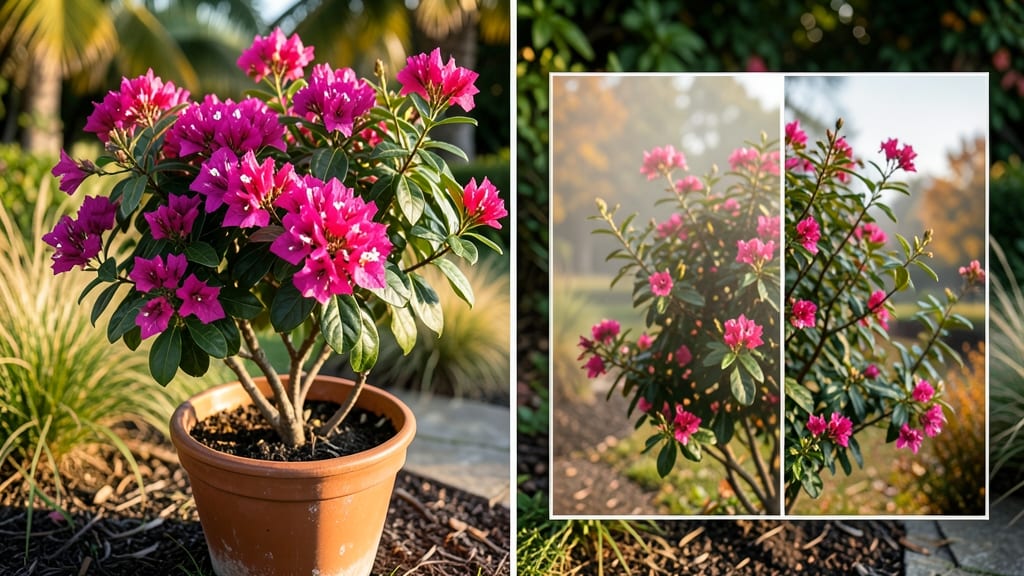
Bougainvillea blooms all year only in frost-free climates like USDA Zones 10-11, where warm temperatures and consistent sunlight trigger continuous flowering. In cooler regions, blooms are seasonal, typically spring through fall with dormancy in winter months.
Bougainvillea thrives in warm climates because it's a tropical plant that can't tolerate freezing temperatures. 🌸 In Zones 10-11, where nights stay above 40°F year-round, the plant remains in active growth, producing vibrant blooms continuously.
Even small temperature drops can signal the plant to enter dormancy, causing blooms to slow or stop entirely. I've seen bougainvillea in Zone 9 gardens produce fewer flowers in winter, while those in Zone 10 maintain near-constant color with proper care.
What's fascinating is how bougainvillea responds to light—it actually needs 6+ hours of direct sunlight daily to trigger flowering. In cooler regions, gardeners often use winter protection like frost cloth or move potted plants to sheltered locations to maintain blooming.
The key is replicating the warm, sunny conditions bougainvillea naturally loves.
💡 In This Article
- Climate Zones That Sustain Year-Round Bougainvillea Blooms
- Tips to Extend Bougainvillea Blooming in Cooler Regions
Climate zones that sustain year-round bougainvillea blooms
Bougainvillea's continuous flowering in USDA Zones 10-11 happens because these areas maintain temperatures above 40°F year-round, preventing dormancy. The plant's native tropical origins mean it thrives when nights stay warm—any dip below 32°F can cause leaf drop and halt blooming.
In these zones, bougainvillea receives 300+ sunny days annually, with consistent 12+ hours of daylight during winter, which keeps photosynthesis and flower production active.
The key mechanism is photoperiodism—bougainvillea responds to light duration rather than seasonal changes. In Zones 10-11, shorter winter days (around 10-11 hours) still provide enough light because the plant's critical threshold is 6+ hours of direct sunlight daily.
Humidity also plays a role: tropical zones maintain 60-80% relative humidity, reducing stress that could trigger dormancy. 🌿 In contrast, Zone 9 gardens often see blooms slow in winter because nights drop to 35-40°F, signaling the plant to conserve energy.
What's less obvious is how bougainvillea's root system adapts. In frost-free zones, roots stay active year-round, continuously absorbing water and nutrients. This contrasts with temperate zones where roots may enter dormancy, limiting flower production.
The plant's bracts (the colorful parts we see as flowers) actually develop from leaf buds, and warm temperatures accelerate this process. In Zone 11, I've observed bougainvillea produce new blooms every 4-6 weeks without pause.
Seasonal blooming in cooler regions occurs because temperature fluctuations trigger hormonal changes. When nights drop below 50°F, bougainvillea produces abscisic acid—a stress hormone that promotes dormancy. This causes buds to abort and existing flowers to drop.
The plant conserves energy until warmer weather returns. Even in Zone 9, some gardeners report 6-8 months of blooming by protecting plants during winter, but the cycle remains less continuous than in tropical zones.
Humidity differences also matter. Tropical zones maintain steady moisture levels, while temperate regions experience winter dryness that can stress plants. Bougainvillea's waxy leaves help conserve water, but extreme dryness combined with cold can still trigger dormancy.
In Florida (Zone 10), bougainvillea often blooms more prolifically than in California (also Zone 10) because Florida's higher humidity reduces transpiration stress. 💧 This shows how microclimates within the same zone can affect flowering patterns.
For gardeners in cooler zones, understanding these mechanisms helps explain why bougainvillea behaves differently. The plant isn't "lazy"—it's responding to environmental cues that signal survival rather than continuous growth. In tropical zones, these cues remain optimal year-round, creating the spectacular nonstop displays we associate with bougainvillea.