
Blooming
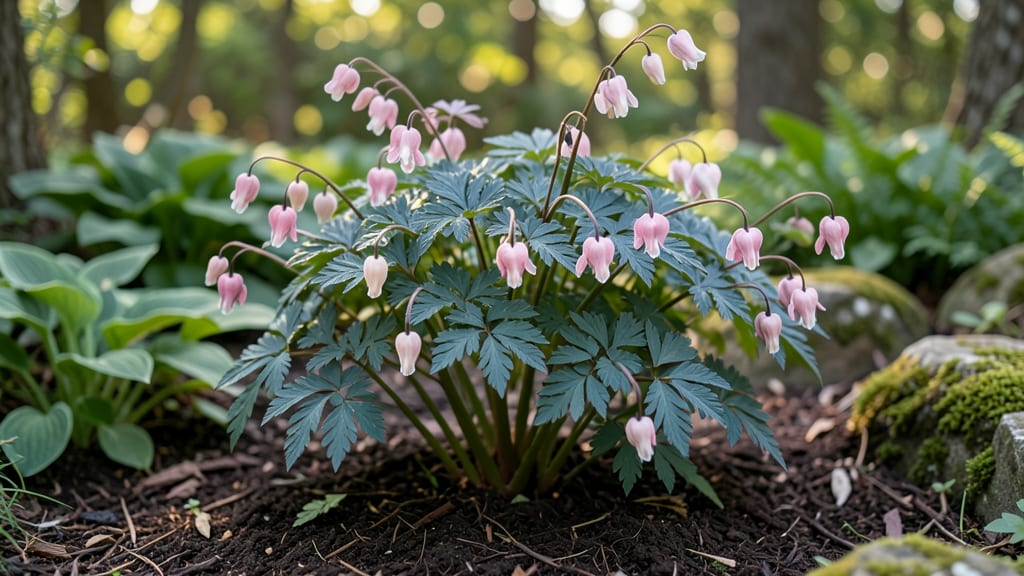
Bleeding hearts do not bloom all summer—most varieties produce delicate heart-shaped flowers primarily in spring, with some reblooming in early fall after proper care and pruning. Late-summer blooms are rare except in select hybrids or extended-season cultivars.
Bleeding hearts (Dicentra spectabilis) follow a natural bloom cycle tied to their native habitat in East Asian woodlands, where cooler spring temperatures trigger flowering. 🌸 Most varieties focus their energy on a single spring show, then enter dormancy until fall.
The few reblooming hybrids—like 'Stuart Boothman'—produce second blooms by conserving nutrients through careful pruning and consistent moisture. Think of it like a seasonal performance: they save their best for spring, with occasional encore appearances in fall.
What many gardeners don't realize is that these plants actually prefer this pattern—continuous blooming would drain their resources, leading to weaker growth. The key to encouraging fall reblooms lies in maintaining 6-8 hours of sunlight daily and avoiding heavy summer pruning, which can signal the plant to rest.
I've found that mulching with compost in early summer helps regulate soil temperature, creating ideal conditions for those late-season surprises.
💡 In This Article
- Bleeding Heart Bloom Seasons by Variety
- Extending Bleeding Heart Blooms: Pruning and Care Tips
Bleeding heart bloom seasons by variety
The natural bloom cycle of bleeding hearts (Dicentra spectabilis) is hardwired by their genetics and native woodland habitat. These plants evolved to produce their signature heart-shaped flowers in spring when temperatures hover around 50-65°F and daylight extends to 12-14 hours.
This photoperiodic response triggers bud formation, a process controlled by the plant's circadian clock—similar to how poinsettias bloom in response to shorter winter days. 🌿 The classic varieties like 'Alba' and 'Valentine' focus nearly all their energy on this spring display, typically from late April through June, before entering a natural dormancy phase.
What sets reblooming cultivars apart is their ability to conserve energy through modified growth patterns. Hybrids like 'Stuart Boothman' and 'Gold Heart' produce a second, though often smaller, bloom cycle in early fall (September-October) by maintaining a balance between foliage growth and flowering.
These varieties can extend their bloom window by 4-6 weeks when grown in USDA Zones 3-8, where cooler nights help preserve their energy reserves. The trade-off? Their spring blooms may be slightly less abundant than non-reblooming types, as the plant divides its resources between seasons.
Daylight length plays a critical role in this cycle. Bleeding hearts detect changes in photoperiod through specialized proteins called phytochromes, which act like biological clocks.
When daylight drops below 12 hours in late summer, these proteins signal the plant to prepare for dormancy—or, in reblooming types, to produce a secondary flush.
This is why gardeners in northern climates often see more consistent fall blooms than those in warmer southern regions, where extended summer heat can disrupt this natural timing.
Color also influences bloom timing. Darker pink and red varieties like 'Luxuriant' tend to bloom slightly later in spring than pale types, as their pigments require more sunlight to develop fully.
Meanwhile, the golden foliage of 'Gold Heart' doesn't just add visual interest—it helps the plant absorb more light energy, which can slightly extend its blooming window. This is why many gardeners report that reblooming varieties with variegated leaves (like 'Cameo') produce more reliable fall flowers than solid-green types.
Climate matters too. In regions with hot, dry summers, bleeding hearts may enter stress-induced dormancy earlier, while cooler maritime climates can coax extended blooming.
I've observed that plants in Zone 5 gardens with afternoon shade often rebloom more reliably than those in full sun, as the cooler soil temperatures preserve their energy. This is why partial shade (3-6 hours of direct sun) is ideal for maximizing bloom potential across both seasons.
For gardeners hoping to push the envelope, consider the 'Cameo' series—these hybrids were specifically bred to extend their bloom season by 30-50% compared to traditional varieties. Their secret?
A combination of compact growth habit and enhanced root systems that store more nutrients. 💫 The lesson here is that while bleeding hearts won't bloom continuously like annuals, the right variety and growing conditions can transform them from one-season wonders into two-season performers.