
Blooming
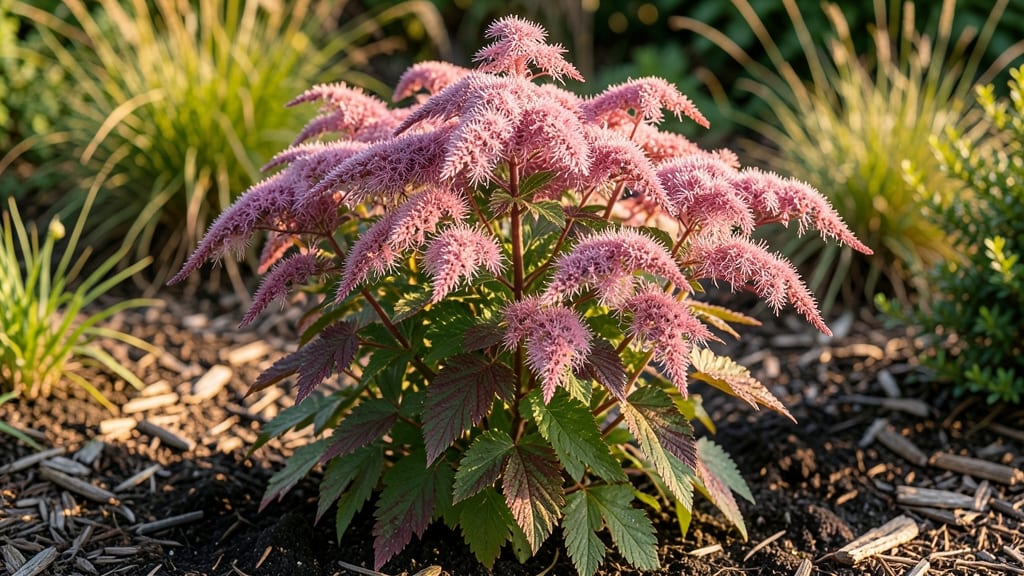
Astilbe plants don't bloom all summer—they produce vibrant flowers for just 4 to 6 weeks during late spring and early summer. While deadheading spent blooms may trigger occasional reblooming in ideal conditions, their natural cycle is seasonal and can't be extended indefinitely with care alone.
Astilbe's short bloom window comes from how they respond to seasonal changes. These plants are daylength-sensitive, meaning they flower when daylight hours reach a specific threshold—typically in late spring when days start lengthening. 🌸 Once they've completed this cycle, their energy shifts to foliage production rather than new blooms.
The good news? With consistent watering and well-draining soil, you can encourage stronger stems next year, which often leads to more abundant (though still seasonal) flowering.
What many gardeners miss is that astilbe's true beauty comes in layers. While they won't provide continuous color like annuals, their fern-like foliage remains decorative long after blooms fade. This makes them perfect for garden beds where you want year-round interest without the maintenance of constant reblooming plants.
💡 In This Article
- Astilbe Flowering Season: Why It’s Short and How to Prolong It
- Best Astilbe Care Tips to Maximize Blooms Year After Year
Astilbe flowering season: why it’s short and how to prolong it
Astilbe’s limited bloom cycle is hardwired into its genetics as a perennial plant adapted to temperate climates. These plants follow a strict seasonal rhythm triggered by daylength (photoperiodism)—they only initiate flower buds when daylight hours exceed 14-16 hours, typically in late spring.
Once blooming begins, the plant’s energy shifts from vegetative growth to reproductive growth, which naturally exhausts after 4-6 weeks as temperatures rise and daylight stabilizes. This biological clock explains why you’ll rarely see astilbe flowers beyond early summer unless you intervene with specific care techniques.
The temperature sensitivity of astilbe plays a crucial role too. Ideal blooming occurs when daytime temps hover between 60-75°F, with cooler nights. When summer heat exceeds 85°F, the plant conserves energy by focusing on foliage rather than new blooms.
This is why astilbe often produces its most vibrant displays in USDA Zones 4-8, where spring temperatures are moderate. In hotter climates, you might see delayed or weaker blooms unless you provide afternoon shade or mulch to keep roots cool.
Deadheading—removing spent flower stalks—can trick astilbe into producing secondary blooms, but only under perfect conditions. The key is timing: snip off faded blooms right at the base (not just the top) within 2-3 days of wilting.
This removes the plant’s signal to stop flowering and may stimulate new buds if daylight hours are still increasing and temps remain mild.
However, expect these reblooms to be smaller and less abundant than the initial flush, and they’ll likely appear in late summer rather than extending the original bloom period.
What most gardeners overlook is how root stress affects reblooming potential. Astilbe’s delicate root systems are prone to drying out or overheating, which weakens the plant’s ability to produce new flowers. Maintaining consistently moist (not soggy) soil with 2-3 inches of organic mulch helps preserve energy for potential secondary blooms.
Without this foundation, even deadheading won’t yield results—your astilbe will simply focus on storing nutrients for next year’s growth.
Consider this real-world example: In Zone 5 gardens, astilbe typically blooms from mid-May to early July. A gardener in Chicago who deadheaded weekly and maintained 60% shade cloth during heatwaves reported 2-3 weeks of sporadic reblooming in August.
Meanwhile, a Houston gardener with similar care saw no reblooms because summer temps consistently exceeded 90°F. The difference? Climate control through shade and moisture management.
Here’s the science behind why reblooming is rare: Astilbe’s flower buds form in the previous year’s growth, meaning the plant’s energy reserves are already allocated. Forcing a second bloom cycle requires significant metabolic effort, which most astilbe varieties simply can’t sustain.
That’s why hybrid varieties like ‘Fanal’ (deep red) or ‘Deutschland’** (pink) are prized—they’ve been bred to allocate energy more efficiently, but even they have limits.