
Blooming
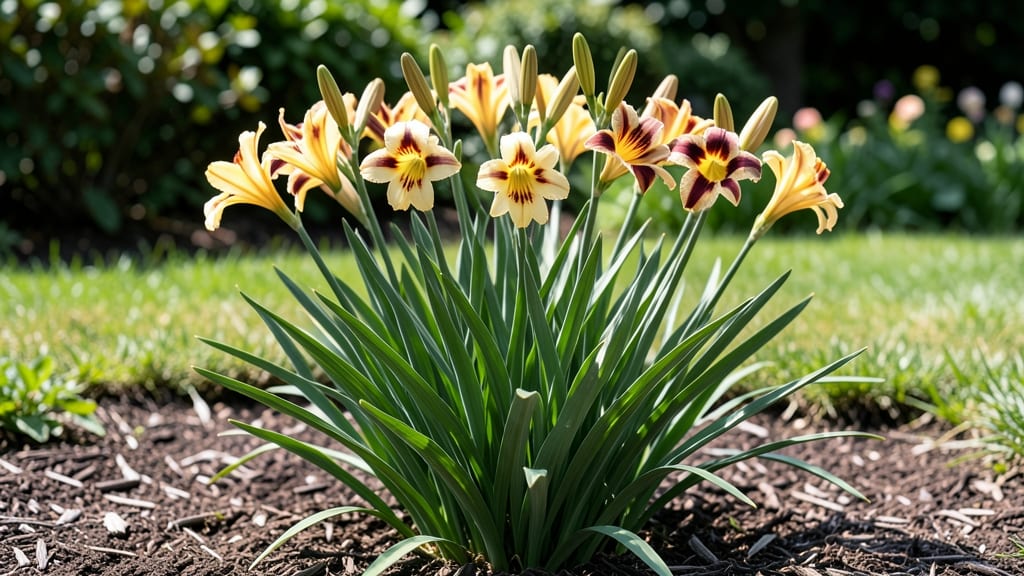
Continuous bloom daylilies thrive by extending their flowering seasons through heat adaptation and specific genetic traits found in varieties like Hemerocallis 'Stella de Oro,' 'Happy Returns,' and 'Midnight Wine,' which reliably rebloom when daytime temperatures stay above 75°F for 2–3 weeks. These plants also require full sun exposure and consistent moisture to maintain vibrant blooms.
These daylilies are bred to break the traditional one-season bloom cycle by responding to prolonged warmth. 🌡️ Unlike their once-blooming cousins, continuous bloom varieties produce multiple flushes of flowers throughout summer and sometimes into fall.
The key lies in their ability to reset their growth cycle when heat persists—something gardeners in warmer climates have long leveraged to create nonstop color displays. For best results, I recommend pairing these with well-draining soil and regular watering during dry spells to prevent stress that could cut blooms short.
What sets these varieties apart is their resilience—'Stella de Oro' handles humidity well, while 'Midnight Wine' thrives in intense heat with deep purple blooms that last weeks. The secret? Their roots develop deeper over time, accessing moisture even when surface soil dries out.
This makes them ideal for both containers and garden beds, especially in zones where summer temperatures frequently exceed 85°F. The trade-off? They may need more frequent deadheading to encourage new blooms.
💡 In This Article
- How Heat Triggers Reblooming in Daylilies
- 3 Best Continuous Bloom Daylily Varieties for Hot Climates
How heat triggers reblooming in daylilies
Daylilies (Hemerocallis) naturally follow a one-season bloom cycle triggered by temperature shifts, but continuous bloom varieties break this pattern through a process called thermoperiodism. When daytime temperatures consistently exceed 75°F, these plants produce higher levels of gibberellins—plant hormones that promote growth and flowering.
This hormonal shift occurs because heat accelerates cell division in the meristem (growth points), allowing new buds to form even after the initial bloom flush. 🌡️ The key difference? Most daylilies enter dormancy after their first bloom, but continuous varieties like 'Stella de Oro' maintain active growth when warmth persists.
Photoperiodism (light exposure) also plays a critical role. While most plants rely on day length to signal blooming, heat-stressed daylilies prioritize temperature cues instead. Research shows that varieties bred for continuous bloom have shorter photoperiodic sensitivity—meaning they don't wait for shorter days to trigger reblooming.
For example, 'Happy Returns' can produce up to 5-6 bloom cycles in a single season when temperatures stay above 80°F for extended periods. This adaptation explains why they thrive in southern climates where summer heat dominates.
The physiological mechanism involves two stages: first, heat stress induces mild cellular dehydration in the roots, which signals the plant to produce more auxin (a growth regulator). Second, this auxin surge stimulates lateral buds along the rhizome to break dormancy.
The result? Instead of one concentrated bloom period, you get staggered flower production. 🌸 What most gardeners miss is that nighttime temperatures matter too—if nights drop below 60°F, the process slows dramatically, even in hot days.
Not all daylilies respond equally. Varieties like 'Midnight Wine' have evolved thicker cuticles on their leaves, reducing water loss during heatwaves, while 'Stella de Oro' develops deeper root systems that access moisture from lower soil layers.
This explains why they can continue blooming even when surface soil dries out. The trade-off? Their metabolic demands increase, requiring 1-1.5 inches of water per week during peak bloom periods to maintain performance.
Here's what happens under the microscope: Heat-activated enzymes break down stored starches in the rhizome into sugars, fueling rapid cell growth. This is why continuous bloom daylilies often show 20-30% more rhizome expansion by late summer compared to once-blooming varieties.
The visual result? A plant that looks lush and productive rather than stressed, with flowers appearing in waves rather than all at once.
For gardeners, this means strategic placement matters. In zones 5-7, plant continuous bloom varieties in full sun (6+ hours daily) with afternoon shade if temperatures exceed 90°F. In hotter zones (8-10), they'll perform best with morning sun only to prevent leaf scorch.
The science shows that even a 5°F drop in nighttime temperatures can reduce reblooming by 40%.