
Blooming
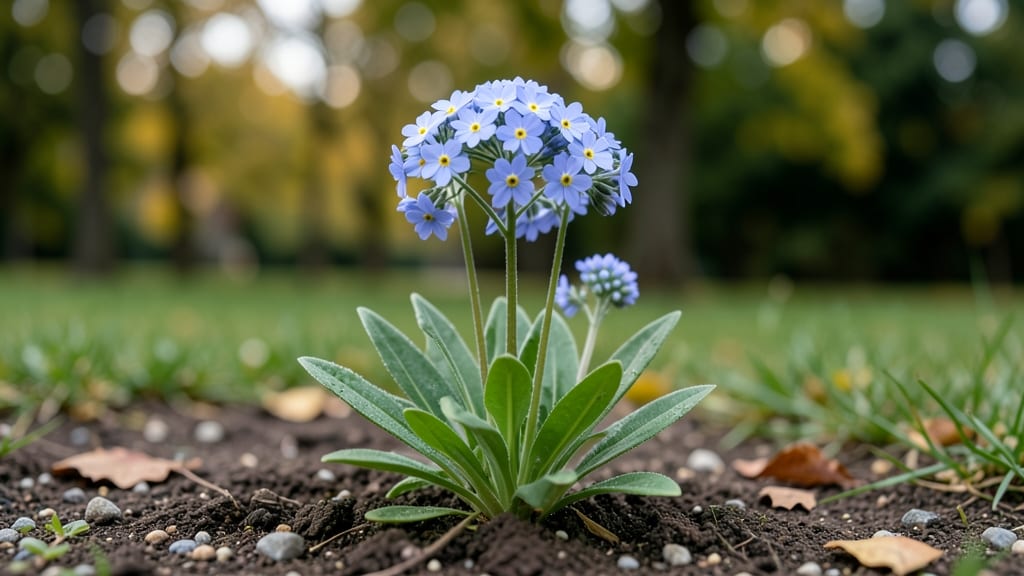
Forget-me-nots do not bloom all summer; they thrive primarily in spring and early summer, offering vibrant blue or pink flowers for about 4-6 weeks before entering dormancy. Some cool-weather varieties might produce a secondary flush with proper deadheading, though consistent blooming requires careful garden maintenance.
Forget-me-nots are cool-season plants, meaning their blooming cycle is directly tied to temperature and daylight patterns. 🌸 Unlike summer-blooming annuals, they enter dormancy when heat intensifies, which is why you won't see them in full bloom during mid-to-late summer.
The key to extending their display lies in deadheading spent blooms—this encourages new growth and can coax a second round of flowers in cooler fall months, especially in regions with mild summers.
I've found that planting them in partial shade helps preserve their delicate blooms longer, while full sun can accelerate their seasonal decline.
What many gardeners don't realize is that forget-me-nots actually prefer cooler climates, with ideal temperatures between 50-70°F. When summer heat arrives, their energy shifts toward seed production rather than flowering, which is why you'll often see them fading by July.
The good news? With the right care—consistent moisture, well-draining soil, and occasional fertilization—they can provide intermittent blooms throughout the growing season, making them a charming addition to spring and fall gardens alike.
💡 In This Article
- Forget-Me-Not Flowering Seasons and Climate Dependencies
- Extending Forget-Me-Not Blooms: Pruning and Care Tips
Forget-me-not flowering seasons and climate dependencies
Forget-me-nots (Myosotis spp.) are classified as cool-season biennials or perennials, which means their growth and flowering cycles are tightly regulated by temperature and daylight cues. Their blooming period begins in late spring when average temperatures rise to 50-60°F but haven't yet reached the 75°F+ threshold that triggers dormancy.
This explains why you'll typically see their signature blue or pink flowers between April and June in most temperate zones.
The plants rely on a process called vernalization—where exposure to prolonged cold (around 40°F for several weeks) primes their flowering mechanism, similar to how some vegetables need winter chilling to produce.
The length of daylight also plays a critical role. Forget-me-nots are short-day plants, meaning they flower more readily when daylight hours shorten—this is why their peak bloom often coincides with spring's transition to summer.
In regions with long summer days (like the Pacific Northwest or northern Europe), they may produce a secondary flush in early fall when temperatures dip again.
However, in hot climates (such as the American South), the intense heat and long daylight periods force them into dormancy by early summer, sometimes as early as May. 🌿 This is why forget-me-nots rarely thrive in tropical or subtropical gardens without special care.
There's a key difference between annual and perennial varieties. Annual forget-me-nots (like Myosotis sylvatica) complete their entire life cycle in one season, blooming profusely in spring but fading by midsummer.
Perennial types (such as Myosotis scorpioides) can regrow from roots in cooler climates, but even these struggle to rebloom in heat.
The plant's energy shifts from flowering to seed production when temperatures exceed 75°F, which is why you'll often see them producing tiny green seed pods instead of new blooms during peak summer months.
Geographic location dramatically affects bloom timing. In cooler maritime climates (like the UK or Pacific Northwest), forget-me-nots may bloom as late as July due to milder summers, while in continental climates (such as the Midwest), they typically finish by early June.
Even within the same region, microclimates matter—plants in shaded garden beds often bloom 1-2 weeks later than those in full sun because cooler soil temperatures delay their response to spring warming.
This is why gardeners in hotter zones often plant forget-me-nots in containers, where they can be moved to shaded spots during summer heat.
What's fascinating is how forget-me-nots use photoperiodism—they detect changes in daylight length through specialized proteins called phytochromes. When days start shortening in late summer, these proteins trigger hormonal changes that can stimulate a second round of blooms, but only if temperatures remain moderate (65-70°F).
This explains why you might see sporadic reblooming in fall gardens, especially in regions with mild autumns like the Pacific Coast or New England. The trade-off? This second flush is usually less abundant and shorter-lived than the spring display.
For gardeners hoping to extend the blooming season, understanding these natural triggers is half the battle.
The other half involves creating conditions that mimic the plant's preferred climate—whether through strategic planting, shade provision, or even choosing heat-tolerant varieties like Myosotis alpestris, which can handle slightly warmer conditions than classic types. The result?
A garden that stays vibrant longer, even if it never achieves true summer-long blooms. 🌸