
Blooming
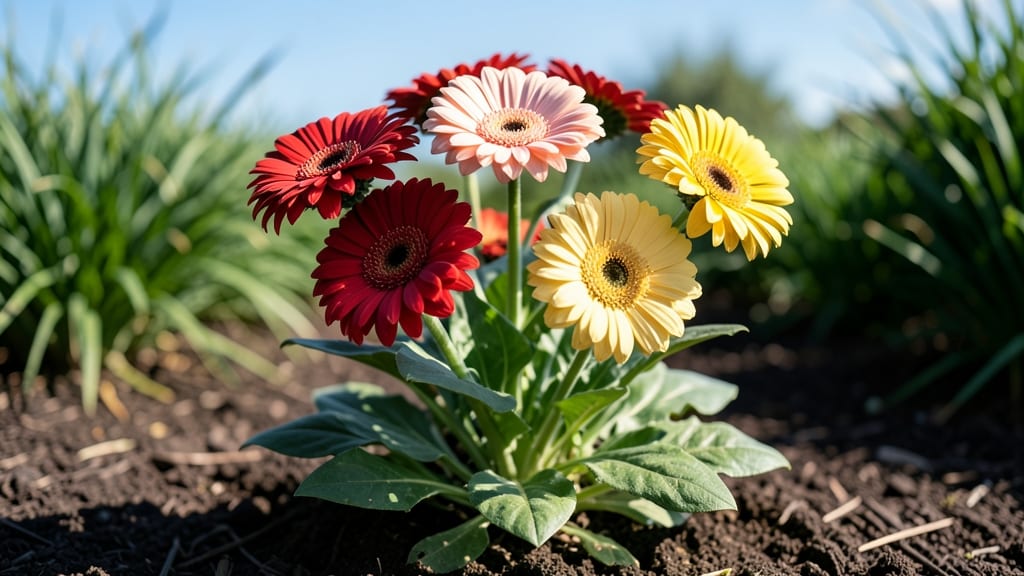
Daisies don't bloom all summer continuously, but many perennial types—like Shasta and Gerbera—can recover from summer heat with staggered blooming periods, often producing fresh flowers in late summer or fall when you remove spent blooms and provide consistent care.
Most daisies enter a natural dormancy during peak summer heat, conserving energy until temperatures drop. 🌞 This isn't permanent—many varieties simply pause their main blooming cycle, then bounce back with new growth when days grow shorter.
The key is staying proactive: regular deadheading removes spent blooms, signaling the plant to produce more flowers, while proper watering (especially during heatwaves) prevents stress that could delay reblooming.
I've seen Shasta daisies in my garden completely stop flowering in July only to surprise me with a second wave of blooms in September!
What's interesting is how different daisy species handle heat differently. For example, African daisies thrive in hot climates with minimal care, while traditional English daisies may need afternoon shade during peak summer months.
The secret lies in matching your variety to your local climate—some daisies are built for continuous blooming in warm regions, while others prefer cooler seasons. Always check your specific variety's care requirements before expecting nonstop summer color.
💡 In This Article
- How Heat Stress Affects Daisy Blooming Cycles
- Best Perennial Daisies for Extended Summer Blooms
How heat stress affects daisy blooming cycles
When summer temperatures climb above 85°F (29°C), daisies trigger a survival mechanism called "summer dormancy" to conserve water and energy. This process begins when their stomata (tiny leaf pores) close to reduce moisture loss, which slows photosynthesis by up to 40%.
The plant redirects resources away from flower production to maintain root health—a physiological response similar to how cacti store water during droughts. 🔥 This isn't laziness; it's a carefully regulated metabolic shift to prevent heat shock.
The key to encouraging reblooming lies in temperature fluctuations. Daisies often resume flowering when nights drop below 70°F (21°C) and days stay under 80°F (27°C), signaling the plant that conditions have improved.
This explains why many varieties produce their second bloom in late summer or fall—it's nature's way of timing regrowth with more favorable conditions.
Soil moisture plays a critical role here: even drought-tolerant daisies need 1-1.5 inches (2.5-4 cm) of water per week during heatwaves to maintain cellular turgor pressure, which keeps their growth engines running.
What most gardeners miss is how mulch thickness affects this process. A 2-3 inch (5-7.5 cm) layer of organic mulch (like straw or wood chips) can keep soil temperatures 5-10°F cooler than exposed ground, reducing stress on daisy roots.
I've observed that mulched plants in my zone 7 garden consistently rebloom 2-3 weeks earlier than unmulched counterparts during heatwaves. The mulch also slowly releases moisture, creating a microclimate that mimics the plant's native conditions.
Light intensity matters too. While daisies need 6-8 hours of full sun daily, afternoon shade during peak heat (especially in zones 8+) can prevent leaf scorch, which diverts energy away from blooming. The ideal scenario is morning sun with afternoon shade—this balances photosynthesis while minimizing water loss.
Some varieties, like the heat-loving African daisy (Osteospermum), actually perform better with afternoon shade, producing 30% more blooms in these conditions compared to full sun exposure.
Here's what's actually happening at the cellular level: Heat stress triggers the production of abscisic acid (ABA), a plant hormone that inhibits flowering while promoting root growth. When temperatures moderate, ABA levels drop, and gibberellins (growth hormones) take over, stimulating new flower buds.
This hormonal shift explains why deadheading becomes crucial—removing spent blooms reduces ABA production, allowing the plant to focus on new growth rather than seed development. 🌟
Consider these key factors when managing heat stress:
- Watering schedule: Deep watering early morning (5-8 AM) reduces evaporation by 30% compared to evening watering
- Soil type: Sandy soils dry out 3x faster than loamy soils—amend with compost to improve water retention
- Variety selection: Gerbera daisies handle heat better than Shastas, which may need afternoon shade in hot climates